Plants vs. Zombies™ 2
ELECTRONIC ARTSCasual
3.7200.54K Reviews
- Version
- 13.4.1
- Installs
- 10.00M
- Age Rating
- Everyone
Screenshots
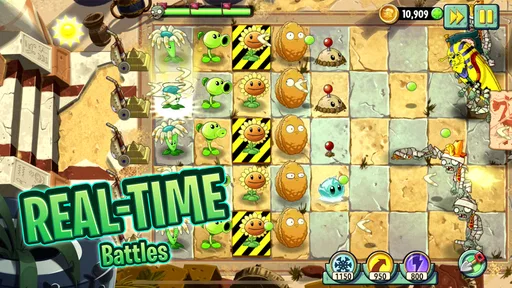
Our Review of Plants vs. Zombies™ 2
 Analysis by Appyee
I tend to enjoy games that are easy to pick up but still reward a little thought, and Plants vs. Zombies™ 2 fits that mood well. It turns a brief break into a small tactical puzzle: I look at the approaching zombies, decide which lanes need help, and try to spend sunlight and plant food at the right moment. The humor keeps the pressure light, even when a level makes me rethink my plan.
A good fit for passing a device around
This is a casual strategy game from ELECTRONIC ARTS, and its short, self-contained battles make it an easy choice when someone in the household wants a quick turn. One person can try a level, then hand the device to another without needing a long explanation of a complicated story. The appeal is less about competing with one another and more about comparing choices: which lane looked dangerous, which plant should have gone down sooner, and whether a saved plant-food boost would have helped.
A realistic use is a few minutes after dinner or while waiting for an appointment. I can play one stage, pause between attempts, and come back when I have another spare moment. That stop-and-start rhythm is more practical for shared use than a game that expects everyone to commit to a long session at once. It is still worth agreeing whose turn it is before a level begins, since another player may not want their current attempt interrupted.
Keep expectations clear on a shared device
Before letting someone else play, I would make sure they understand that they are using the same game on the same device. I would not assume that separate household members have separate progress or settings simply because they take turns; anyone who cares about preserving a particular run should check what the game actually presents on that device before another person starts tapping. That small conversation is less exciting than planting defenses, but it can prevent avoidable confusion.
The free entry point is helpful for trying the game together, though it does not mean every option is free. In-app purchases range from $0.99 to $99.99 per item, so I would set a clear household rule about purchases and make sure the person holding the device knows to ask before spending. The game can be played without paying, but a younger player may still encounter prompts or reasons to consider optional purchases. Treating “free to start” and “permission to buy” as two different things is the sensible approach.
Age, trust, and the kind of play it encourages
The game is rated Everyone, and its comic presentation makes the zombie theme feel silly rather than frightening to me. That rating can help a parent decide whether the tone suits a child, but it is not a substitute for checking the game together and deciding what is comfortable. The more useful household question is whether the child can handle a game that includes optional spending and levels that may take repeated attempts.
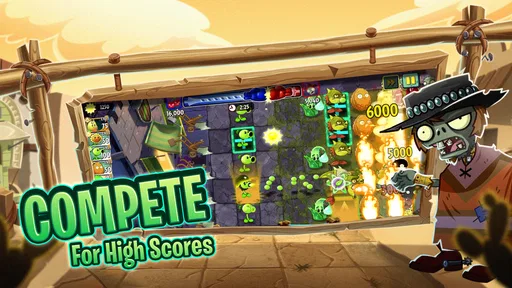
I like that the central activity asks for observation rather than fast reactions alone. A player can notice a pattern, try a different plant arrangement, and learn from a failed defense. That makes it a reasonable pick for a child who enjoys puzzles and playful cartoon action. It is less suitable for someone who becomes upset when a level does not go their way, or for a household seeking a quiet activity with no purchase prompts to discuss.
How the strategy feels beyond the first few levels
As a casual game, it sits in a useful middle ground between very simple tap-and-wait diversions and more demanding strategy titles. I get more to consider than I would in a basic matching game, but I do not need to learn a long rulebook before a battle makes sense. The plant-versus-lane structure gives each decision a visible consequence, which is a big part of why a retry can feel worthwhile instead of arbitrary.
When a level goes badly, I try to identify the specific failure rather than changing everything at once. Was a lane left open too long? Did I spend sunlight on a plant that did not answer the threat in front of it? Did I use plant food early because it looked impressive, rather than saving it for a moment when the defense was actually at risk? Changing one choice at a time makes retries more informative and helps me learn which plants suit my habits.
That approach also helps with shared play. Instead of handing over the device and saying “just try again,” I can explain the problem I noticed and let the next player test a different response. It turns a short session into a small collaborative puzzle without needing a separate multiplayer mode. The trade-off is that a person who simply wants to relax may not want advice or tactical discussion, so I would keep the coaching optional.
Practical limits, purchases, and who should skip it
The game’s free-to-play structure is its clearest friction point. Optional purchases may appeal to someone who wants particular unlocks or a shortcut, but they can also make the experience feel less even if a player would rather earn progress through play. I would start without spending and see whether the normal pace feels satisfying. If the repeated attempts and gradual progress are already enjoyable, there is little reason to buy anything just because an offer appears.
It is also not the best choice for every kind of casual player. Someone who wants a fresh, self-contained puzzle each time and dislikes progression systems may prefer a simple puzzle game. A player looking for a deep, open-ended strategy experience may find the lane defense format too structured. Plants vs. Zombies 2 works best for people who like familiar rules with changing threats, colorful presentation, and the satisfaction of adjusting a plan after a loss.
There is a practical device question too: the game requires Android 7.0 or later, so I would check that before recommending it to someone with an older Android device. For households sharing one phone or tablet, I would also pick a calm moment to start rather than launching a level when the device may need to be handed over immediately. A defense can be short, but an interrupted attempt is still an annoying way to end a turn.
What I would want a new player to know
Plants vs. Zombies 2 is free to download, has an Everyone age rating, and is on version 12.9.1. It has an average rating of 3.8 from around 673,000 ratings, with over 10 million installs. Those figures suggest a widely tried game, but I would treat them as context rather than a guarantee that its pacing or purchase approach will suit every player.
My best beginner tip is to resist planting automatically as soon as sunlight becomes available. First look across the whole lawn, consider which lane is most exposed, and keep enough flexibility to respond when the wave changes. The same restraint applies to plant food: a boost is most useful when it solves a real problem, not simply because it is ready. This habit makes the game feel more strategic and can reduce the urge to spend on a quick fix when a level gets tough.
Another useful habit is to treat each era’s new plants and enemies as a reason to reassess, not as decoration around the same old plan. A setup that worked in one stage may be poorly matched to the next. I would experiment with the tools the game gives me before deciding that a difficult level demands a purchase; learning how a plant handles a particular threat can be more satisfying than bypassing the challenge.
For a household, coordination is mostly about expectations rather than elaborate arrangements. Decide who is playing, whether advice is welcome, and whether purchases are off-limits unless an adult approves. If one person is invested in progress, let them finish their attempt before passing the device along. These simple boundaries make the game easier to enjoy together without assuming it has special family or account features.
Why I still enjoy returning to the lawn
So, what’s the scoop with Plants vs. Zombies™ 2? Imagine the thrill of defending your lawn, but now you’re not just stuck in your backyard. This time, you’re traveling through different eras, each with its own unique zombies and challenges. It’s like a history lesson, but with more brains and sunflowers.
The game starts with our beloved neighbor, Crazy Dave, who accidentally eats a taco and wants to eat it again. Naturally, the only way to do that is by building a time machine. This whimsical storyline perfectly sets the stage for the adventures that follow.
Gameplay Mechanics: More Than Just Planting
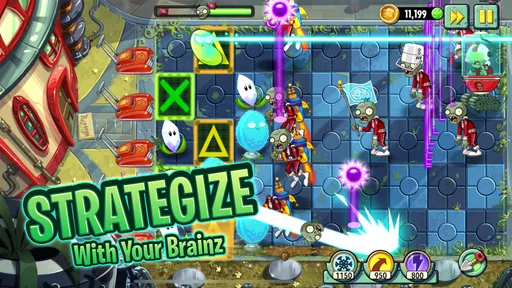
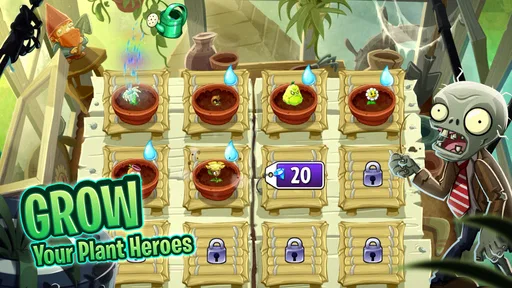
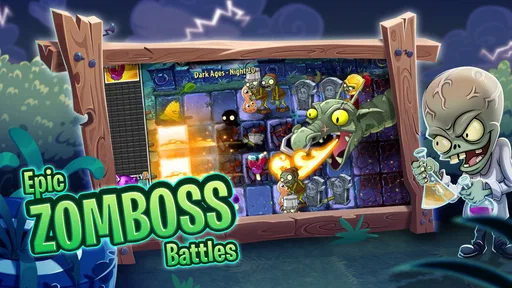
Let’s dive into the gameplay because that’s where the magic truly happens. You’re still collecting sun to plant your defenses, but now there’s a whole new layer of strategy. Each era introduces new plants with special abilities that you have to master to fend off increasingly bizarre zombie foes. From Ancient Egypt to the Pirate Seas, each level is a fresh challenge.
The introduction of plant food is a game-changer. It gives your plants a temporary boost, which can turn the tide of a losing battle. Timing is everything, and using plant food strategically can make you feel like a tactical genius.
Graphics and Sound: A Feast for the Senses
I have to say, the visuals in Plants vs. Zombies™ 2 are a treat. The vibrant colors and charming animations make the game feel alive. Each era has its own distinct aesthetic, from the dusty sands of Egypt to the lush jungles of the Jurassic Marsh. It’s a visual journey that keeps your eyes glued to the screen.
The sound design is equally impressive. The quirky background music and the iconic zombie groans add a layer of immersion that complements the gameplay beautifully. It’s those little details that make the experience so enjoyable.
In-App Purchases: A Necessary Evil?
Let’s talk about the elephant in the room: in-app purchases. Yes, Plants vs. Zombies™ 2 is free to play, but it does nudge you towards spending some cash. Whether it’s for unlocking premium plants or extra resources, the temptation is there. However, you can absolutely enjoy the game without spending a dime. Patience and strategic planning can get you through the toughest levels.
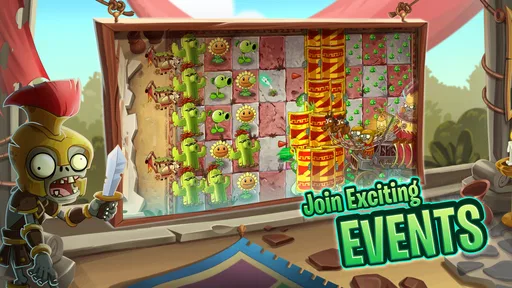
For those who don’t mind a little grind, the game offers plenty of rewards through daily challenges and events. It’s all about how you choose to approach it.
Final Thoughts: A Worthy Sequel
Overall, Plants vs. Zombies™ 2 is a delightful sequel that builds on the original’s success while offering new and exciting gameplay elements. The time-traveling aspect keeps things fresh, and the variety of plants and zombies ensure there’s never a dull moment. Whether you’re a veteran of the series or a newcomer, there’s something to love here.
Sure, the in-app purchases can be a bit of a hurdle, but they don’t detract from the overall experience. If you’re looking for a game that’s both challenging and fun, I highly recommend giving this one a try. Grab your shovels and start planting – those zombies aren’t going to stop themselves!
Verdict
Strengths of Plants vs. Zombies™ 2
- Engaging gameplay with strategic depth.
- Vibrant graphics and playful animations.
- Regular updates with new levels and features.
- Wide variety of plants and zombies.
- Free to play with optional in-app purchases.
Limitations of Plants vs. Zombies™ 2
- Requires constant internet connection.
- Can be pay-to-win at higher levels.
- Advertisements can be intrusive.
- Energy system limits playtime.
- Some levels require in-app purchases.
Other Releases by ELECTRONIC ARTS
View All
Plants vs. Zombies™
Strategy3.7

EA SPORTS FC Soccer Mobile 26
Sports4.6

EA SPORTS™ NBA LIVE Mobile
Sports4.1

SimCity BuildIt
Simulation4.1
Similar Picks in This Category
View All
My Talking Angela
Outfit7 Limited4.2

My Talking Tom
Outfit7 Limited4.3

Pou
Zakeh4.2

My Talking Tom 2: Pet Game
Outfit7 Limited4.3

Candy Crush Saga
King4.6

Bridge Race
Supersonic Studios LTD4.1
Frequently Asked Questions
What is the main objective of Plants vs. Zombies™ 2?
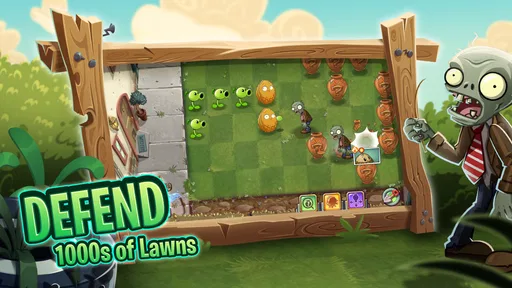
Plants vs. Zombies™ 2 is a tower defense game where players strategically place plants to fend off waves of zombies. The main objective is to protect your brain by planting various types of plants, each with unique abilities, to stop the advancing zombies across different worlds and levels.
Is Plants vs. Zombies™ 2 free to play?
Yes, Plants vs. Zombies™ 2 is free to download and play. However, it offers in-app purchases that allow players to buy additional coins, power-ups, and premium plants. These purchases can enhance gameplay but are not necessary to complete the game.
What are the system requirements for Plants vs. Zombies™ 2?
For Android devices, Plants vs. Zombies™ 2 requires Android 4.1 or higher. For iOS, it requires iOS 9.0 or later. Both platforms require a stable internet connection for downloading updates and accessing certain features. Ensure your device meets these requirements for optimal performance.
Does Plants vs. Zombies™ 2 require an internet connection?
While Plants vs. Zombies™ 2 can be played offline, an internet connection is needed for accessing certain features like updates, in-app purchases, and special events. To enjoy the full range of content and functionality, it's recommended to play while connected to the internet.
How do the in-game currencies work in Plants vs. Zombies™ 2?
The game uses two main currencies: coins and gems. Coins are earned through gameplay and used for purchasing power-ups. Gems are rarer and can be used to buy premium plants and upgrades. Both currencies can be obtained through regular play or purchased with real money.
Play our best games!


